Achieve Battery Service Bliss
April 3, 2012 by Clore Automotive
Filed under More Articles
Working around vehicle batteries can be vexing at times. Is the problem the battery, the battery connections, your equipment or something else altogether? We get calls all week, every week, related to these issues and they often can be grouped under a few common headings. So, in an effort to help you on your road toward battery service bliss, we address the most common issues that cause problems in the area of battery service applications and equipment.
When testing a battery installed in a vehicle, do your best to connect your leads directly to the battery posts rather than the harness hardware. Digital battery testers are precise instruments and results can be skewed if the tester is connected via battery hardware. Connecting directly to the posts when performing a battery test will ensure that you get the most accurate results. This may require use of a vehicle memory saver when the hardware is removed, but this extra step is worth it to achieve a true, accurate assessment of battery condition.
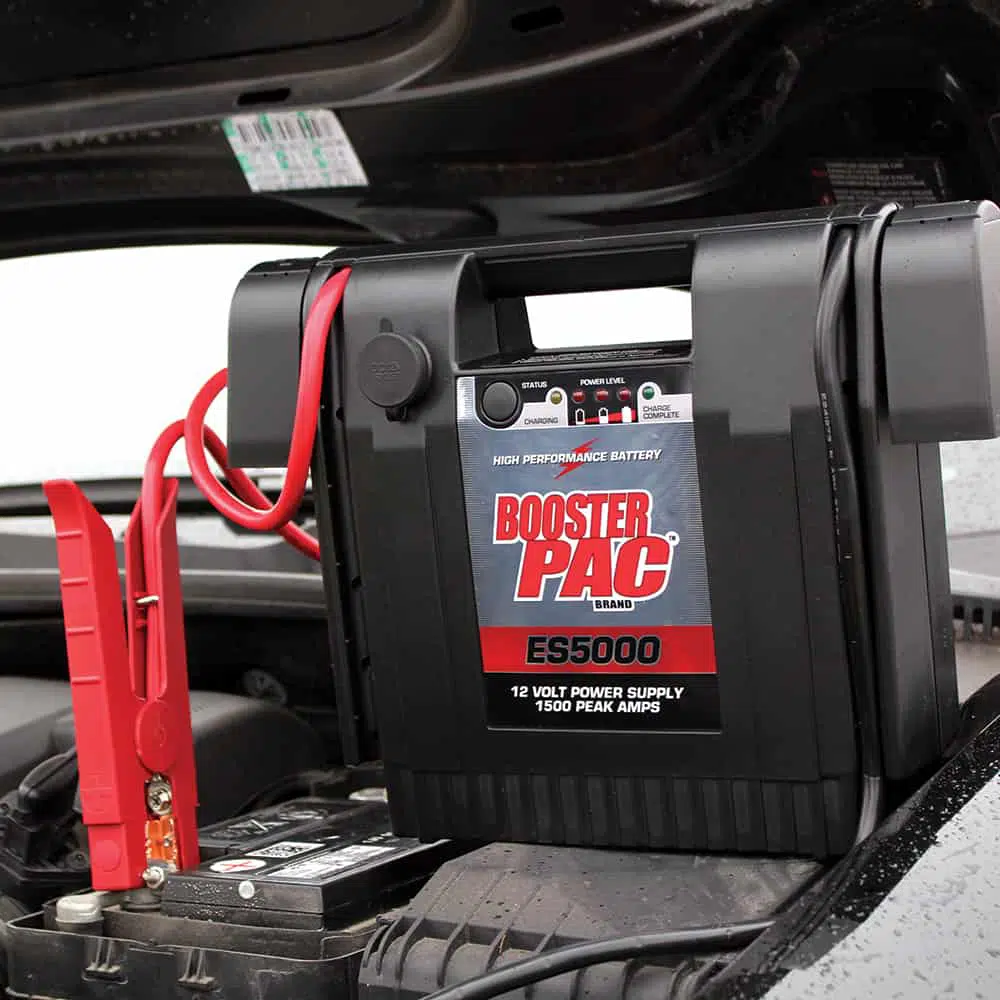
When jump starting, a little extra effort to find a good vehicle ground is well worth it. This is one we get many calls on and one that is a point of contention in many of the forums. The negative jump starter clamp should not be connected to the negative battery post. It is always safest to connect to a vehicle ground. This is the best practice and should be followed every time you jump start. But, failure to find a good, conductive ground can lead to the perception that your jump starter is not working properly. It may take an extra moment or two to identify a proper vehicle ground, but will save you time in the end by allowing you to get an effective start on your first try.
Know what kind of battery you are charging and then charge it appropriately. In today’s environment, charging a battery is no longer the simple ”See battery, connect to battery, charge battery. Done.” It is critical to know what type of battery you are charging and to have the right equipment to properly charge each type of battery. For instance, an AGM battery requires a different charging curve than a traditional flooded battery. If you don’t know that your battery is an AGM battery or know but don’t have a charger that can charge it properly, you risk damaging that battery.
View the battery charging application as a preventive maintenance step. Gone are the days where you should reach for your charger only when you have an issue and fear a costly battery replacement or are trying to get a few more days/weeks from a battery on its last legs. Today’s vehicle battery is subject to significantly higher demand from vehicle electronics and accessories than in days past. As a result, batteries are being cycled (drained beyond a surface demand, such as vehicle starting) like never before. Periodically charging your battery with a quality battery charger will help you extend the life of your battery by counteracting the chemical processes that lead toward battery deterioration and shortened life.
Charge your jump starter frequently. If you left your car parked in your garage for six months of storage, would you expect to be able to turn it over without first charging its battery? Most people would say no – they know that the car would not have the power to fire the starter. Yet, we regularly get calls asking why a jump starter is dead after 12 months of idle storage. You have made an investment in a jump starter, hopefully a quality one. You should charge it every 90 days to ensure that it will be ready when you need it the most. We have made it easier than ever to keep up with your jump starter charging cycles. You can now sign up to receive free recharge reminders. Simply visit http://start.cloreautomotive.com/get-in-charge.html and complete the signup form and we will send you quarterly recharge reminders. It’s that easy.
Vehicle repair and maintenance can be trying, particularly when you are working on charging and starting system issues. There are many variables in play in diagnosing and resolving such issues, but keeping in mind the five simple steps above will eliminate a number of pitfalls before they happen and put you on the road toward Battery Service Bliss.
Safety First, Safety Always
February 24, 2012 by Clore Automotive
Filed under More Articles
Here at Clore, we deal mostly in the theoretical. While we try to get out in the field as much as possible, the reality is that we spend much more time in the office than we like. We know that, while we have a high level of interaction with our products and the applications they perform, we are coming at those applications from a very different perspective than someone who uses our products in the course of their daily work. With this in mind, we would never presume that we know more than those in the field, doing the vehicle repairs and maintenance that keep vehicles on the road.
Except, perhaps, when it comes to safety. Safety is a very critical issue in vehicle service, particularly when working on and around vehicle batteries, which can be very dangerous if improperly handled. We recently had the opportunity to observe a battery shop installer perform a simple vehicle battery replacement application and were disturbed by some of what we saw. So, we thought that experience could provide a good opportunity to address safety concerns when working on or around vehicle batteries.
ISSUE #1. The installer walked out to the vehicle with the new battery and had no safety goggles or other safety gear of any kind. Batteries can be unpredictable and a simple mistake could lead to a shorted battery (see ISSUE #4 below), which is very dangerous. Each of us gets just one set of eyes, so always protect them when working on or around a vehicle battery. Safety glasses are a must.
ISSUE #2. When disconnecting the vehicle’s battery cables from the old battery, he disconnected the positive cable first. It didn’t happen in this case, but this could result in arcing or sparking, as the battery harness is being pulled off the battery post. The best practice is to disconnect the battery ground connection first, then the positive (ungrounded) connection. When connecting the new battery, first connect the positive connection, then the battery ground connection.
ISSUE #3. Once the old battery was disconnected from the vehicle electrical system and loosened from its moorings, it was removed with little or no regard for securing the battery cables, now loose and free to travel within the general battery area. This is problematic, more for the vehicle than the operator, but should be accounted for nonetheless. It is a good practice to secure the positive battery cable in such a way that it cannot come into contact with other electrical parts or a vehicle ground. This may take an extra minute or two, but that time is very well spent.
ISSUE #4. As the team at Clore Automotive responsible for writing our operator’s manuals, we are highly sensitive to the warnings that consistently appear in our Battery Service Equipment manuals. Here’s a big one: “Be extra cautious to reduce risk of dropping a metal tool onto a battery. It might spark or short circuit the battery or another electrical part that may cause explosion.” So, you could imagine our concern when the young installer placed a metal ratchet on the new battery after it was placed into the battery compartment. Something as simple as brushing against that ratchet with his elbow and knocking it into contact with the battery posts could have resulted in a major incident.
ISSUE #5. This last one is likely more a preference than a true safety issue, but we think it is worth mentioning. This shop’s standard practice for saving vehicle memory during a battery replacement was to connect a small jump starter to the battery cables and then disconnect the old battery. In this way, the jump starter powers the vehicle until the new battery is installed. While this may be fine in principle, at Clore, we would suggest that the use of a memory saver (ours or others) is more practical and reduces the likelihood of shorting the battery cables while they are not connected to the battery.
As a reader, you may think we are being overly critical of this particular situation, and you might be right. But, we saw too many issues not to be concerned. And, we believe that safety is a topic that can’t be overstressed.
Diagnosing and Overcoming Parasitic Drains
January 20, 2012 by Clore Automotive
Filed under More Articles
In this piece, the first of several we plan that identify resources related to a specific electrical vehicle application, we have pulled together a number of reference articles and videos related to the issue of parasitic drains. Some
of the resources referenced are more general in nature, covering the issue and addressing tools and tricks recommended for best results, while others address a specific aspect related to this issue.
A Comprehensive Approach
In this extensive article, Motor Age Technical Editor Peter F. Meier addresses issues related to parasitic drains and related electrical issues. As he points out, identifying, diagnosing and resolving parasitic drains can often require numerous and varied techniques. As he notes, “Honing your diagnostic skills is similar, in that the more testing techniques you know, the more ammunition you have to take down any electrical problem that comes your way.”
Among other things, he highlights how to use circuit voltage drop as a way to identify the area of the electrical system that could be the source of the problem and then use current flow to further narrow your search to the culprit. Throughout the course of the article, he also identifies the tools that come into play for this application. While we might quibble with his approach to saving vehicle memory while a battery is disconnected, we recognize the expertise, thought and experience that went into this thorough article.
Another Great Overview
In this article, Dave Hobbs of Scope it Out, the Automotive Diagnostic NewsBlog, provides an overview of this vexing issue and suggests strategies for effective diagnosis and remedy. He addresses the practical consequences of parasitic drains and their real world implications for vehicles that aren’t operated on a daily basis. How long could this vehicle sit before there is an issue? What if the battery begins in a compromised state?
Hobbs suggests tools and techniques for accurately pinpointing the source of such problems. He also distinguishes between the different types of parasitic drains and how your strategy might change for each. Overall, it is a great article and provides a fundamental grounding in the battle against parasitic drains.
Clamp Down On Electrical Gremlins – The Trainer Video Series
Here is Peter Meier again, with a video called Clamp Down On Electrical Gremlins, which is found on the Search-AutoParts.com web site. In this great video, Mr. Meier touches on a variety of topics addressed in the above referenced article. He demonstrates how a technician can use a low amp clamp to identify troublesome parasitic drains in the first portion of this video.
Parasitic Draw – Video Tutorial
Dave Hobbs once again, this time with a video primer on diagnosing parasitic drains. Here, the emphasis is on identifying and resolving parasitic drains without the removal of the vehicle’s battery. This approach is particularly useful when seeking out intermittent parasitic draws from electronic modules, which can’t be diagnosed if the battery has been removed. While this video is an excerpt from an ASE Test Prep Video (paid for content) and, as a result, is not a complete tutorial, it does provide a wealth of useful information and perhaps points to a resource that is worth your investment. Either way, it provides 9 minutes of tips and tricks for this difficult issue.
We hope that these resources are useful to you and help you deal with the issue of parasitic drains more effectively and efficiently in your operation. Clore Automotive offers a wide variety of products that can be very useful for this application. From jump starters that enable starting of a vehicle with a depleted battery to advanced battery chargers to bring depleted batteries back to a useful state to digital battery and system testers to assess and diagnose electrical system difficulties, when it comes to professional battery service equipment, we’ve got you covered.
7 Tips for Heavy-Duty Jump Starting Success
December 5, 2011 by Clore Automotive
Filed under More Articles
As the mercury drops, it is a good time of year to review some best practices when it comes to jump starting heavy-duty vehicles. This is another topic that keeps our Tech Service lines buzzing at this time of year.
Here are 7 tips to remember for Heavy-Duty Jump Starting Success:
1. Always make sure you have the right tool for the job. Jump starters come in a wide variety of sizes and some are designed to perform a variety of functions. But, the primary function of any jump starter is to get your vehicle(s) started when you need it. So, make sure to employ a jump starter that is properly aligned with your specific starting needs. This is doubly important when jump starting heavy-duty vehicles.
2. Take care of your jump starter and it will take care of you. Keep it charged up, especially during extreme temperatures, which are always hardest on batteries. Also, if you can store it at a temperature above 50˚F during the winter months, it will perform better.
3. Don’t underestimate the importance of finding a good vehicle ground for your negative clamp. A complete conductive circuit is an absolute must for jump starting success. You should be looking for a heavy gauge metal part of the vehicle chassis or engine block, away from the battery. NEVER connect to a carburetor, fuel lines or sheet metal body parts.
4. If the vehicle’s battery is a traditional flooded battery, make sure it has the proper water level as identified in the manufacturer’s guidelines. If the water level is low, add distilled water as per the manufacturer’s guidelines. NEVER overfill, which could cause leakage and other problems. Also, remember to NEVER attempt to jump start a frozen battery.
5. On vehicles with multiple batteries, the condition and conductivity of the battery connections is particularly critical. Check that all battery connections are tight and secure. Visually inspect the connections for signs of deterioration or other problems. For instance, discoloration of the battery connection can often be the result of carbon deposits on the cabling, which will cause a voltage drop across that cabling, sapping your starting power.
6. On vehicles with multiple batteries, always connect to the battery closest to the starter. This will ensure that the maximum power available from the jump starter is transferred to the starting system, not depleted by the battery bank, which can be quite taxing, depending on the number of batteries involved.
7. On larger vehicles, such as OTR trucks, first take a few minutes to light the glow plugs. Properly connect the jump starter, put the vehicle’s key in the accessory position and light the glow plugs, which should take 20-40 seconds. Then, turn the vehicle’s key to the off position and allow the jump starter to recover for 2-3 minutes. Then, attempt to jump start the vehicle. This process will greatly increase odds of success.
When it comes to deciding what size of jump starter is needed for your heavy-duty jump starting tasks, there are many factors that come into play, including the types of vehicles you need to start, the number of jump starts you are required to perform on any given day, the number of batteries in the typical vehicle to be started and the temperature extremes you experience in your specific climate. Each company’s needs are different and, as noted in Tip No. 1 above, it is important to choose the right tool for your needs.
Often, after speaking to our Technical Service team, fleet operators and implement dealers determine that a roll-around jump starter, such as the SOLAR HT1224
, is what is required for their needs. When it comes to heavy-duty starting, this unit is the “Big Boy” of wheeled jump starters and is specifically designed for the over-the-road transportation, transit and heavy-duty implement industries. It exceeds the challenges of frigid weather and delivers the instant raw power of 1400 CCA in 12 Volt mode and 800 CCA in 24 Volt mode. If you have extreme starting needs, the HT1224 is a unit you should learn more about.
Additionally, a tool that could pay significant dividends when it comes to jump starting heavy-duty vehicles is a digital battery and system tester. This type of tool can help you identify the source of starting problems: is it the battery(ies), the starting system or the charging system? The SOLAR BA44 is a great diagnostic tool. Lightweight and ergonomic, it can test batteries rated from 40-2000 CCA, as well as diagnose starting and charging system issues. Plus, it can diagnose all battery types, from traditional flooded batteries to newer AGM and Gel Cell battery types.
A Practical Guide to Today’s Battery Types
November 9, 2011 by Clore Automotive
Filed under More Articles
Battery composition and construction has changed more in the last several years than it had in the prior four decades. New battery chemistries and constructions are gaining increasing traction with OEs around the world and are becoming increasingly present as aftermarket alternatives in North America. In addition, traditional flooded batteries are seeing dramatic improvements in an effort to bring many of the advantages promised by the newer battery types.
The purpose of this article is to review the lead acid battery types available on the market today as well as address the charging and maintenance challenges presented by each one. In addition, we will present options for keeping batteries of all varieties in optimal condition.
Traditional Flooded Lead Acid Batteries
Still the most common battery type that you will find in vehicle starting applications, traditional flooded batteries are characterized by electrodes/plates immersed in a wet electrolyte solution. The primary benefits of flooded batteries are their high power density (power to weight ratio), their relative low cost and their wide availability. Flooded acid batteries have a large number of plates designed for maximum surface area to deliver maximum current output for optimal vehicle starting power.
The primary drawbacks of traditional flooded batteries are their poor suitability for cycling (deep discharge) applications, their volatile nature when spilled or jarred and their relative susceptibility to vibration deterioration. Flooded acid batteries designed for starting automotive engines are not designed to regularly encounter deep discharge situations. Repeated deep discharges will result in capacity loss and ultimately in premature failure, as the electrodes disintegrate due to mechanical stresses arising from cycling.
With increasing electrical demand as additional electronics and conveniences are added to today’s vehicles, major battery manufacturers are developing next generation flooded acid batteries that better address the need for a cost effective battery that still delivers high starting power but adds the ability to withstand more frequent cycling. This is leading to smarter flooded acid batteries, which in turn benefit from the advanced charging logic available from microprocessor-controlled battery chargers.
AGM Batteries
AGM batteries are fully enclosed VRLA (Valve Regulated Lead Acid) batteries in which the lead plates are suspended within a glass mat separator material. In an AGM battery, the battery’s electrolyte is held in the glass mat, as opposed to freely flooding the plates. AGM batteries can come in several types of design, but these essentially condense down into two types: AGM flat plate and AGM spiral wound, where flat plate appears very similar in outlook to traditional flooded batteries while spiral wound looks quite different, as exemplified by Optima brand batteries. In each case, the underlying approach is the same, but the look or design of the battery appears different.
AGM battery construction has several advantages. First, because the glass mat provides structure and support to the plates, the plates can be made from purer lead, resulting in greater power density (power to weight ratio). Second, AGM batteries can better withstand frequent deep cycling for longer life in those applications. Today’s vehicles need to be able to support a much higher power demand than vehicles of the past. As a result of this power demand, vehicle batteries are cycled (drained heavily and recharged) far more than in the past, driving a greater emphasis on battery reserve capacity and the durability needed to stand up to these new usage patterns. Third, their mat structure makes them much more vibration resistant than traditional flooded batteries. Finally, they conserve water, as they never require additional water to be added to them.
A primary drawback of AGM batteries is their relatively high cost. AGM batteries typically cost 50%-100% more than an equivalently powered flooded battery, though some of that initial cost premium could be mitigated by longer unit life, depending on your application. Another drawback is that AGM batteries require a battery charger that is compatible with their specific charging needs. Generally, this means employing a “smart” charging routine that incorporates a constant current phase for the majority of the charging process and will precisely control battery voltage throughout the charging process.
Gel Cell Batteries
Gel Cell batteries are fully enclosed VRLA (Valve Regulated Lead Acid) batteries in which a gelling agent, typically silica fume, is added to sulfuric acid to create a gel-like and immobile electrolyte to reduce movement of the plates inside the battery case. Gel Cell batteries come in a wide variety of shapes and sizes and are very popular in wheelchair, golf cart and marine applications.
Gel Cell batteries have several advantages versus traditional flooded batteries. Like AGM batteries, Gel Cell batteries can better withstand frequent deep cycling for longer life in cycling applications. Today’s vehicles need to be able to support a much higher power demand than vehicles of the past. As a result of this power demand, vehicle batteries are cycled (drained heavily and recharged) far more than in the past, driving a greater emphasis on battery reserve capacity and the durability needed to stand up to these new usage patterns. Also like AGM batteries, they are more vibration resistant. Finally, they feature a long shelf life and can perform successfully in wide operating temperatures.
The primary drawbacks of Gel Cell batteries are similar to AGM batteries: they typically cost 50%+ more than the equivalent flooded battery and require the use of specialized charging equipment. Gel Cell batteries require a battery charger that is compatible with their specific charging needs. Generally, this means employing a “smart” charging routine that incorporates a constant current phase for the majority of the charging process and will precisely control battery voltage throughout the charging process.
Deep Cycle and Marine Batteries
In the case of a deep cycle battery, it is important to identify the underlying battery construction to know exactly what type of battery it is. Typically, batteries identified as deep cycle are manufactured using AGM or Gel Cell construction due to the cycling benefits of those constructions, but some batteries labeled deep cycle are of the traditional flooded construction. The same is true of marine batteries. Some marine batteries are used in starting applications, which typically benefit from usage of a traditional flooded battery. Some marine batteries are used in continuous power applications, such as powering a trolling motor, which typically benefit from usage of an AGM or Gel Cell battery.
So, with batteries labeled more for their application (Deep Cycle, Marine, etc.), it is more important to know their underlying construction (AGM) than application (Deep Cycle) when determining how to charge and maintain those batteries. As these batteries are more complex and often more expensive than traditional batteries, they too benefit from the use of a quality smart charger when charging and maintaining them. When charging, find the charge settings that best match the construction (rather than application) and use those for optimal results.
The Charger for All Battery Types… Today and Tomorrow
A great example of a battery charger that meets the needs of the batteries of today and tomorrow is the SOLAR Pro-Logix line of battery chargers. SOLAR Pro-Logix battery chargers are fully automatic battery microprocessor-controlled chargers that use advanced technology to deliver an optimal charge to each battery they encounter.
For technicians and repair facilities, SOLAR Pro-Logix battery chargers offer the peace of mind that batteries are charged correctly, enabling the technician to service their customer’s vehicle in the best manner possible. Plus, Pro-Logix provides the confidence to the technician that he or she has the right tool for the job, regardless of the battery type in each vehicle.
For consumers, CHARGE IT! 4500 Series battery chargers provide amazing versatility, due to the ability to properly charge virtually any vehicle in their garage, from cars and trucks to tractors and jet skis. In addition, CHARGE IT! 4500 Series battery chargers boast a variety of features that make charging easier and safer. These include automatic operation, Smart Clamp Technology, reverse polarity protection and battery fault detection.
Always Remember Charging Safety
Whether charging a flooded acid battery or a newer AGM or Gel Cell battery, always remember to focus on safety first. This means wearing protective eyewear and clothing, following all battery manufacturers’ recommendations, reading and understanding equipment usage manuals and never smoking near a battery. The output cables of any charging or jump starting equipment that you use should be positioned away from any moving engine parts. You should always work in a well ventilated area. Someone should always be within range of your voice or close enough to come to your aid when you work near a lead-acid battery.
Charge Smart, Charge Safe with SOLAR
Manual Charging – When is Enough, Enough
September 9, 2011 by jimohara
Filed under More Articles
Most service bay shop chargers are of the wheel charger variety and the vast majority of those feature manual charging controls. This has both positives and negatives for the shop. The best aspect of manual charging is that it allows the technician to specify all relevant charging parameters. The charger does exactly what it is told to do, with no intervention or overrides on its part. The largest drawback of manual charging is that the technician must take care to ensure the battery isn’t overcharged. Overcharging, and the prevention of it, is a topic that results in numerous calls to our Technical Service support team each week and our goal with this article is to address the key issues related to manual charging.
The first thing to address is the general charging routine you should follow each time you perform this application:
1. Visually inspect the battery for signs of damage. Charging a damaged battery is dangerous and should be avoided. Check that there isn’t liquid collecting on the top of the battery (a possible sign of leaking) or mushrooming corrosion forming on the battery posts. Both are bad signs and should be cleaned off prior to attempting to charge the battery.
2. Determine the battery type, if possible. For instance, is it a traditional flooded battery, an AGM battery or another type of battery? This will be important for subsequent steps.
3. If the battery is a traditional flooded battery, check the electrolyte levels in each cell and adjust to meet manufacturer’s specifications as needed.
4. Test the battery. Is it a properly functioning battery that simply needs a charge? If so, proceed with charging. If the tester indicates the battery is shorted or otherwise damaged, do not attempt to charge the battery.
From here, we’ll pick up with our main focus – determining how to determine the battery’s current state of charge, identifying the best charging rate for different battery types, calculating the length of time of reach full charge and charging the battery.
A key step in manual charging is determining the battery’s state of charge prior to connecting the charger. This will enable you to accurately calculate the time required to bring the battery to full charge. This can be easily done with a digital tester that provides a state of charge assessment or using a hydrometer.
Note: Batteries that have 25% charge or less can easily freeze and should be charged at once, but you should NEVER attempt to charge a battery that is already frozen.
Next, determine the size of the battery in Amp-Hours or Reserve Capacity (Reserve Minutes). These are the only ratings that can be used to determine required length of charging time. Ultimately, you will want the Amp-Hour rating of the battery. So, if the battery is rated in Reserve Minutes, convert to amp hours using the formula below:
(Reserve Capacity/2) + 15.5 = Amp-Hour Rating.
A battery rated at 75 Reserve Minutes would have an approximate Amp Hour rating of 53 Amp Hours.
With the % of charge of the battery and the battery’s size determined, we can easily calculate the amount of time required to bring the battery to full charge. Here comes another formula, but it is straightforward:
((Amp-Hour Rating of Battery x % of Charge NEEDED)/Charging Rate)) x 1.25 = Hours to Full Charge
Here is a quick example: Let’s say you have a 60 Amp Hour battery with a present state of charge of 25%, so the % of charge NEEDED is 75%. Assuming you will charge at a rate of 10 amps, your simplified formula would be: ((60*.75)/10) x 1.25 = (45/10) x 1.25 = 4.5 x 1.25 = 5.625 hours. So, full charge should be reached in just over 5.5 hours.
The higher the rate of charge, of course, the less charging time required. But the old adage “Low and Slow” still applies to today’s batteries, meaning that lower rates of charge are generally best for the long term health of the battery. For typical passenger vehicle batteries, a 40 Amp charging rate is about as fast as should be used as a general rule. For larger batteries used in heavy duty vehicles and implements, higher rates of charge, such as 60 or 70 Amps, are acceptable.
Also, if your charger is equipped with an ammeter, which indicates the charging current being drawn from the charger by the battery, that can be helpful in assessing your charging progress. As the battery becomes more fully charged, the current drawn decreases. But, there is no clear-cut way to read an ammeter and determine exactly when charging is complete – at full charge, the ammeter will still register some current draw. In many cases, overcharging can occur if the charger is not disconnected when the battery reaches full charge – or sooner. Therefore, it is very important that you determine the amount of time needed to reach full charge as outlined above. You’ll be glad you did.
Summer Heat – A Battery’s Worst Enemy
June 29, 2011 by Clore Automotive
Filed under More Articles
While everyone understands that a drop in the mercury can spell trouble for vehicle batteries and other types of batteries, many people do not realize that extreme summer heat is actually even more detrimental for batteries than extreme winter cold. This is an important factor to keep in mind during the summer driving season for your vehicle and for any jump starters that you may own.
When summer temps near triple digits, the underhood temperatures of your vehicle can reach 140-200 degrees, placing great stress on your battery. According to Interstate Batteries, “Summer heat kills batteries 33% faster than winter cold, and more batteries fail in July than in January.” Heat accelerates the natural chemical processes that take place in lead acid batteries, causing the battery’s electrolytes to evaporate. This increases the likelihood and severity of sulfation, which creates corrosion on the battery’s plates and robs a battery of its energy capacity.
There are things that you can do to improve your battery’s performance or at least monitor your battery’s health to know when the time has come to replace it. The list below provides some general guidelines regarding battery maintenance and things to watch for:
Note: Always remember that lead acid batteries are dangerous if not handled and managed properly. Always wear protective eyewear and clothing when working near lead acid batteries, and someone should always be within range of your voice or close enough to come to your aid when you work near a lead-acid battery. In addition, you should have plenty of fresh water and soap nearby in case battery acid contacts skin, clothing or eyes.
- Visually inspect you battery and its connection to your vehicle. Make sure that the battery isn’t cracked, bulging or otherwise damaged. If it is, it should be replaced immediately.
- Is your battery dirty or wet with any type of liquid? If so, it should be cleaned, particularly on the surface where the battery posts exit the battery. Water or other contaminants on the surface of the battery between the posts could cause an electrical path to form, sapping the battery of its power.
- Is there corrosion forming on the battery posts? Is there mushrooming of corrosion from the place where the cables connect to the battery? If so, this should be cleaned using a scouring pad or brush and a baking soda/water mixture. Always use waterproof gloves and protective eyewear when cleaning your battery, and push corrosion away from yourself rather than toward yourself.
- If your battery is a traditional flooded style battery, make sure it has the proper water level as identified in the manufacturer’s guidelines. If the water level is low, add distilled water as per the manufacturer’s guidelines. Do not overfill, which could cause leakage and other problems.
- Consider where your battery is in its useful life cycle. Is your battery over 4 years old? If so, it may be nearing the end of its useful life, particularly if you live in an area of extreme temperatures. If this is the case, you should increase the frequency of your visual inspections to be sure your battery has not deteriorated.
- You can use a battery load tester to determine your battery’s state of health or its ability to deliver the sustained energy required to start a vehicle. Basic load testers are available from a variety of manufacturers and can be found for as little as $50. Digital battery testers perform a wider range of assessment and can be found for as little as $100.
Implications for Jump Starters
Most vehicle jump starters utilize lead acid batteries that are very similar to vehicle batteries. As a result, they suffer similar harmful effects from extreme heat. The prescription for counteracting those effects, though, are somewhat different for jump starters. Here are a few tips:
- During periods of extreme heat, it makes sense to recharge your jump starter more often. A discharged battery is at much greater risk for sulfation than a fully charged battery. Therefore, the acceleration of a battery’s chemical process caused by extreme heat will have more adverse consequences for a discharged battery. At Clore Automotive, we recommend recharging your jump starter once per month during periods of extreme heat.
- Consider where you are storing your jump starter during periods of extreme heat. For instance, if you are a homeowner and normally store your jump starter in your garage, perhaps it makes sense to store your jump starter in the basement during periods of prolonged high temperatures. Or, if you are using your jump starter in a mobile service operation (e.g., tow truck or utility service operation), perhaps it makes sense to store your jump starter in the vehicle’s cab, where presumably the vehicle’s air conditioning is keeping temperatures below outside temperatures. The same is true during the coldest parts of winter – avoiding temperature extreme is always better for battery health.
Simple Steps Can Save Time, Money and Hassle
With these steps, you can ensure that you will safely stay on the road and avoid costly breakdowns. In addition to the above steps, many retail outlets that sell batteries will check your vehicle’s battery free of charge or for a small fee. It is wise to remember that your jump starter’s battery is very similar, chemically, to your vehicle’s battery. When you encounter weather conditions that cause concern for your vehicle’s battery, you should also consider the implications for your jump starter. Simple steps for each could increase their useful life and reduce the chance of a costly failure.
Multi-Battery Charging – A Primer
May 24, 2011 by Clore Automotive
Filed under More Articles
At Clore Automotive, we get many questions each week related to multi-battery charging.
- What is the best way to approach this task?
- What are the benefits of the various approaches?
- What is best for me and my particular situation?
There are really three approaches to multi-battery charging: series charging, parallel charging and multi-bank (multi-channel) charging. Below, we review the specifics of each approach.
Series Charging
In Series Charging, the batteries to be charged are connected in series, which combines the total voltage of all batteries and requires a charger that provides an equivalent output voltage. For instance, if you connect six 12V batteries in series, you would require a battery charger with 90V output voltage under load (to bring each battery to 14+ Volt finish charge).
The primary benefit of series charging is that, in such a configuration, all of the batteries in the series bank get the same charge current (while splitting the voltage between them). As a result, a bad battery in the bank (as long as it does not have an open cell) does not adversely affect the ability of the other batteries in the bank to get the charge they need. Because all batteries in the series bank get the total current of the charger, each of the good batteries gets charged as if there wasn’t a bad battery among them. This is very useful in unattended charging, such as overnight charging.
The drawback of series charging is that each bank to be charged requires the time and effort of establishing the series connection, wiring from battery 1 to battery 2, battery 2 to battery 3, etc. This process is somewhat cumbersome, and care must be taken to make sure the entire bank is wired properly prior to connecting a charger. Another limitation of this approach is the difficulty of scalability. The larger the battery bank, the higher output voltage required in the charger.
Parallel Charging
In Parallel Charging, the batteries to be charged are connected in parallel, which combines the total amperage (amp hours) of all batteries and requires a charger that provides an equivalent output current to bring the bank to full charge. For instance, if you connect 50 12V batteries in parallel, you would require a charger with 150-250 amps output current (which provides a nominal 3-5 amps per battery to be charged).
The primary benefit of parallel charging is the ease with which a large number of batteries can be connected, charged and disconnected. Parallel charging is done using bus bars, in which the charger is connected to a bus bar for the positive and negative outputs and the leads are dropped from the bus bars to each battery. As a result, the connection is quick and easy and charging can commence.
The main drawback of parallel charging is that a bad battery in the bank can affect the other batteries in the bank. For instance, if you were charging 50 batteries on 250A output charger and two of them were highly sulfated, the 250 amps of output current would not be evenly distributed among the 50 batteries. The two highly sulfated batteries would tend to monopolize the output current, absorbing as much as 80 amps each, leaving just 90 amps for the remaining 48 batteries. This likely would mean that the 48 good batteries will not reach full charge in the expected time, because their effective charge rate has been reduced.
Multi-Bank Charging
In Multi-Bank Charging, each battery is connected individually to the battery charger. As a result, this method does not combine either the voltage or the amperage of the batteries to be charged. Rather, each output lead is designed to charge a single battery and controls voltage and amperage accordingly. For instance, you could have a 4 bank charger for 12V batteries with a maximum output per lead of 15 amps.
The primary benefit of multi-bank charging is that each battery is individually charged independent of the other batteries connected to the charger. This means that the specific needs of that battery are being addressed. So, if one connected battery is bad, charging on that battery could be stopped without impacting the other charger outputs.
The main drawback to this method of charging, like series charging, is lack of scalability. If the requirement is to charge more batteries, additional chargers must be added. For instance, if you had a 10 output multi-bank battery charger but wanted to charge 50 batteries simultaneously, you would require 5 separate chargers.
Christie – The Answer to Multi-Battery Charging
The Christie brand of battery service products offers a wide variety of multi-battery charging solutions, from series to parallel to multi-bank charging. Christie battery chargers feature a wide variety of features that make charging safer, more efficient and more effective, including automatic reverse polarity protection, incorporated into many Christie battery chargers.
The Christie product offering includes three parallel chargers in our SA series, offering charging of up to 50 batteries simultaneously: SA10012 (20 batteries), SA17512 (35 batteries) and SA25012 (50 batteries). Made in the USA, they are designed to provide industrial duty continuous charging and feature and automatic taper as the battery bank reaches full charge.
Christie – Maximum Performance • Advanced Technology • Superior Quality
Introducing the New CloreAutomotive.com
April 26, 2011 by Clore Automotive
Filed under More Articles
Clore Automotive is excited to announce the relaunch of its primary web site and catalog portal at cloreautomotive.com. The most noteworthy improvements of the new site are: added functionality, improved user experience and greater integration with other Clore sites.
The new www.cloreautomotive.com brings added functionality and improved user experience by incorporating all Clore Automotive brands in the new site. Christie, CHARGE IT! and CarStart are now shown alongside the Booster PAC, Jump-N-Carry, SOLAR, VIPER and T-TECH brands, making the site a single-point destination for the Clore Automotive family of brands and products. In addition, each item in the catalog has been augmented with expanded descriptions and additional resources, along with added product views, all to make it easier to find the product that best meets the visitor’s needs.
The new www.cloreautomotive.com serves as the central access point for all Clore Automotive online properties. With links to our blog and our interactive sites (www.greatautoproducts.com), it is easy for visitors to reach resources that add to their understanding of our Clore Automotive products. The new site also features easy links to Clore’s presence on various Social Media sites, including Facebook, Twitter and Flickr, allowing end users to easily stay current on new products and promotions from Clore Automotive and our brands.
Clore Automotive Donates $5000 to The Dream Factory of Greater Kansas City
March 30, 2011 by Clore Automotive
Filed under More Articles
Clore Automotive is excited to announce that a donation of $5000 was recently presented to the Dream Factory of Greater Kansas City. Clore Automotive is proud to partner with the Dream Factory and support their very worthwhile efforts.
“The Dream Factory works to bring happiness to the lives of children facing very difficult circumstances. Everyone at Clore Automotive was excited to participate in this effort and happy that we could work toward such a worthy goal,” said Jim Chasm, President and CEO of Clore Automotive.
The Dream Factory works to bring happiness to the lives of children facing very difficult circumstances. Everyone at Clore Automotive was excited to participate in this effort and happy that we could work toward such a worthy goal. — Jim Chasm, President and CEO of Clore Automotive
During 2010, a portion of the proceeds from the sale of SOLAR model PI1500XCD were set aside to benefit the Dream Factory in order to bring a dream to life for a child who faces a life threatening or chronic illness. “The effort was a great success thanks to the support of our many channel partners and resellers. Their active and enthusiastic support made a huge impact on the program,” said Jim O’Hara, Vice President of Marketing for Clore Automotive.
The Greater Kansas City Chapter of the Dream Factory was founded in January 1985. The Dream Factory’s mission is to grant dreams and provide special times to children who are critically or chronically ill. From trips to Disneyland to meeting someone special, the Dream Factory has made thousands of dreams come true for children.